A Complete Guide to AI Interactive Avatars for Enterprise Leaders:
- An AI interactive avatar is a real-time, AI-powered digital human that can see, hear, and respond to users in natural language — without a human operator behind it.
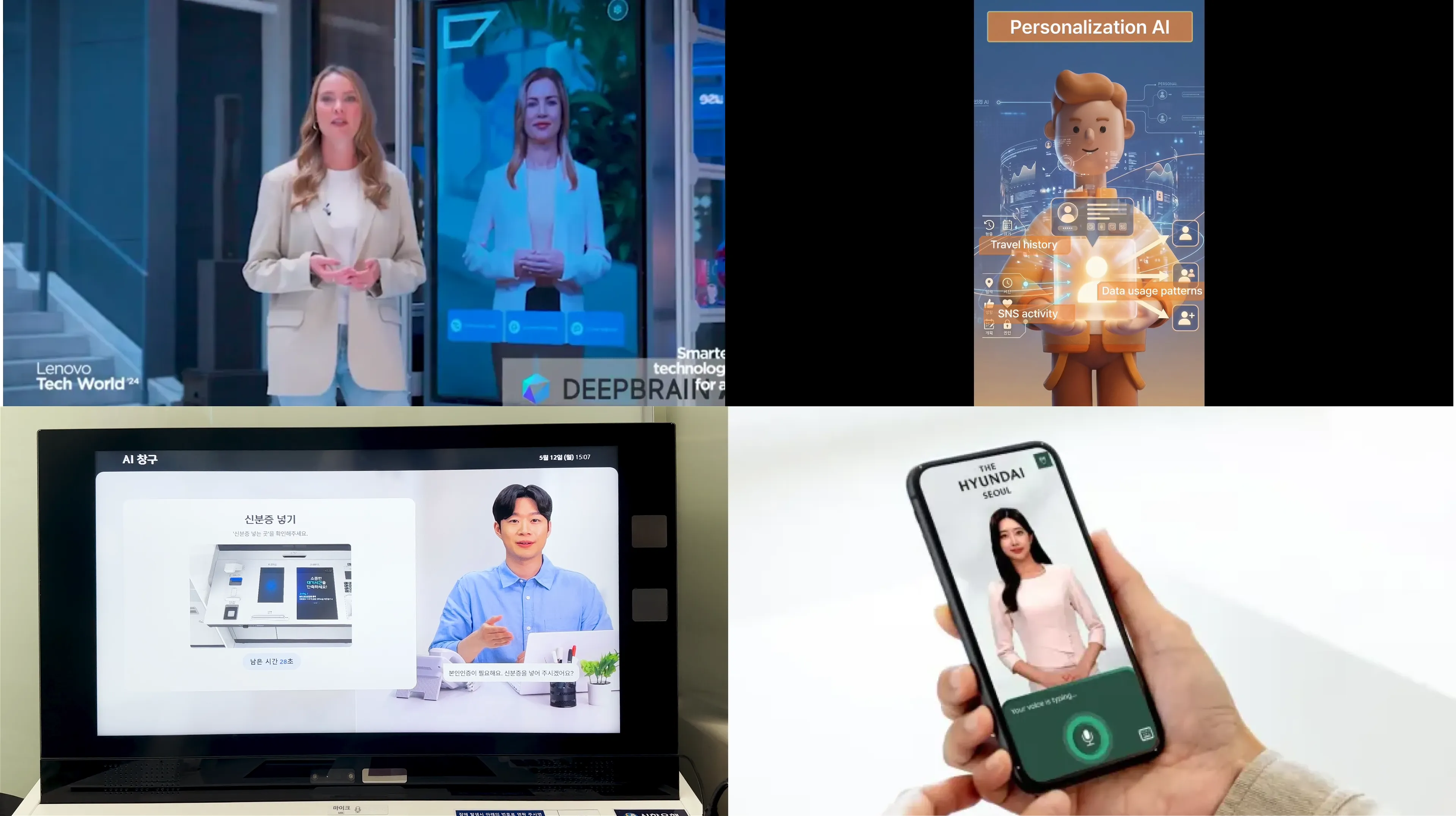
- Enterprise teams are using them for customer service, employee onboarding, sales enablement, and corporate training.
- Compared to chatbots, AI avatars deliver significantly higher engagement and completion rates because they simulate human presence.
- Leading platforms like AI Studios let teams build and deploy custom avatars without technical expertise.

What Is an AI Interactive Avatar?
An AI interactive avatar is a digital human powered by artificial intelligence that can engage in real-time, two-way conversations with users. Unlike static video avatars or traditional chatbots, interactive AI avatars can listen to user inputs, process natural language, and respond — with a human face, voice, and expression — in real time.
Think of it as the visual, conversational front-end of an AI system. The avatar doesn't just deliver scripted responses; it understands context, adapts its answers, and maintains a natural conversational flow that feels closer to talking with a person than interacting with software.
For enterprise teams, this distinction matters. Customers and employees are more likely to engage with — and trust — a system that presents itself in a human-like way.
How Does an AI Interactive Avatar Work?
AI interactive avatars combine several technologies working together:
1. Speech Recognition (ASR)
The system captures and transcribes the user's spoken or typed input in real time.
2. Natural Language Understanding (NLU)
An underlying language model processes the input, interprets intent, and generates a relevant response based on the configured knowledge base or live data.
3. Text-to-Speech (TTS) with Lip Sync
The generated response is converted to speech, and the avatar's facial movements — lips, eyes, expressions — are synchronized in real time.
4. Avatar Rendering
A photorealistic or stylized digital human is rendered on screen, delivering the response with natural body language and facial expressions.
5. Integration Layer
Enterprise avatars connect to backend systems — CRMs, LMSs, knowledge bases, APIs — so they can access real, up-to-date information relevant to the user's query.
The result: a system that looks, sounds, and responds like a human representative — available 24/7, at infinite scale.
Why AI Interactive Avatars Matter for Enterprise Teams
Most enterprises are running into the same wall: the demand for personalized, on-demand communication far outpaces what human teams can deliver. Customer service queues grow. Training completion rates stay low. Internal communications get ignored.
AI interactive avatars directly address these gaps.
The engagement problem with chatbotsTraditional chatbots resolve simple queries well, but they hit a ceiling fast. Users abandon conversations when responses feel robotic or irrelevant. Studies consistently show that visual, human-like interfaces drive higher task completion and user satisfaction than text-only interfaces.
The scale problem with human-led interactionsA human customer service team can handle a finite number of simultaneous conversations. An AI avatar deployment has no such limit — the same avatar can handle thousands of concurrent sessions, in multiple languages, without fatigue or inconsistency.
The content problem with traditional trainingStatic eLearning modules see average completion rates of 15–30% in enterprise settings. Interactive avatar-based training — where employees can ask questions and receive personalized responses — consistently outperforms passive video or slide-based formats.
5 Enterprise Use Cases for AI Interactive Avatars
1. AI-Powered Customer Service Agent
Deploy an AI avatar as the first point of contact for customer inquiries. The avatar handles FAQs, account queries, and product guidance — escalating to human agents only when necessary. Available 24/7 across web, kiosk, and mobile.
Industries: Banking, insurance, retail, telecom
2. Employee Onboarding and Training
Replace static onboarding videos with interactive avatars that guide new employees through processes, answer questions in real time, and adapt based on the employee's role or department.
Industries: Financial services, manufacturing, healthcare, tech
3. AI Brand Ambassador
Use a branded digital human to represent your company at virtual events, on product pages, or in marketing campaigns — consistently, across markets and languages.
Industries: Retail, automotive, luxury, consumer tech
4. AI Tutor / Learning Assistant
Build subject-matter expert avatars that learners can query directly. Instead of watching a 40-minute video, an employee asks the avatar their specific question and gets a direct answer.
Industries: EdTech, corporate L&D, professional certification
5. Internal Helpdesk / HR Assistant
Deploy an AI HR avatar that answers policy questions, guides employees through processes (expense claims, leave requests, benefits), and provides consistent, compliant information without burdening the HR team.
Industries: Enterprises of all sizes with distributed workforces
AI Interactive Avatar vs. Traditional Chatbot: What's the Difference?
The bottom line: chatbots answer questions. AI interactive avatars have conversations. For enterprise use cases where trust, engagement, and personalization matter — the avatar wins.
What to Look for in an AI Interactive Avatar Platform
Before selecting a platform, enterprise teams should evaluate across five dimensions:
1. Avatar Customization
Can you create a branded avatar that reflects your company's identity? Look for platforms that offer custom appearance, voice, and persona configuration — not just a library of generic avatars.
2. Knowledge Base Integration
The avatar is only as useful as the information it can access. Ensure the platform supports integration with your existing knowledge base, CRM, or LMS via API.
3. Language and Localization Support
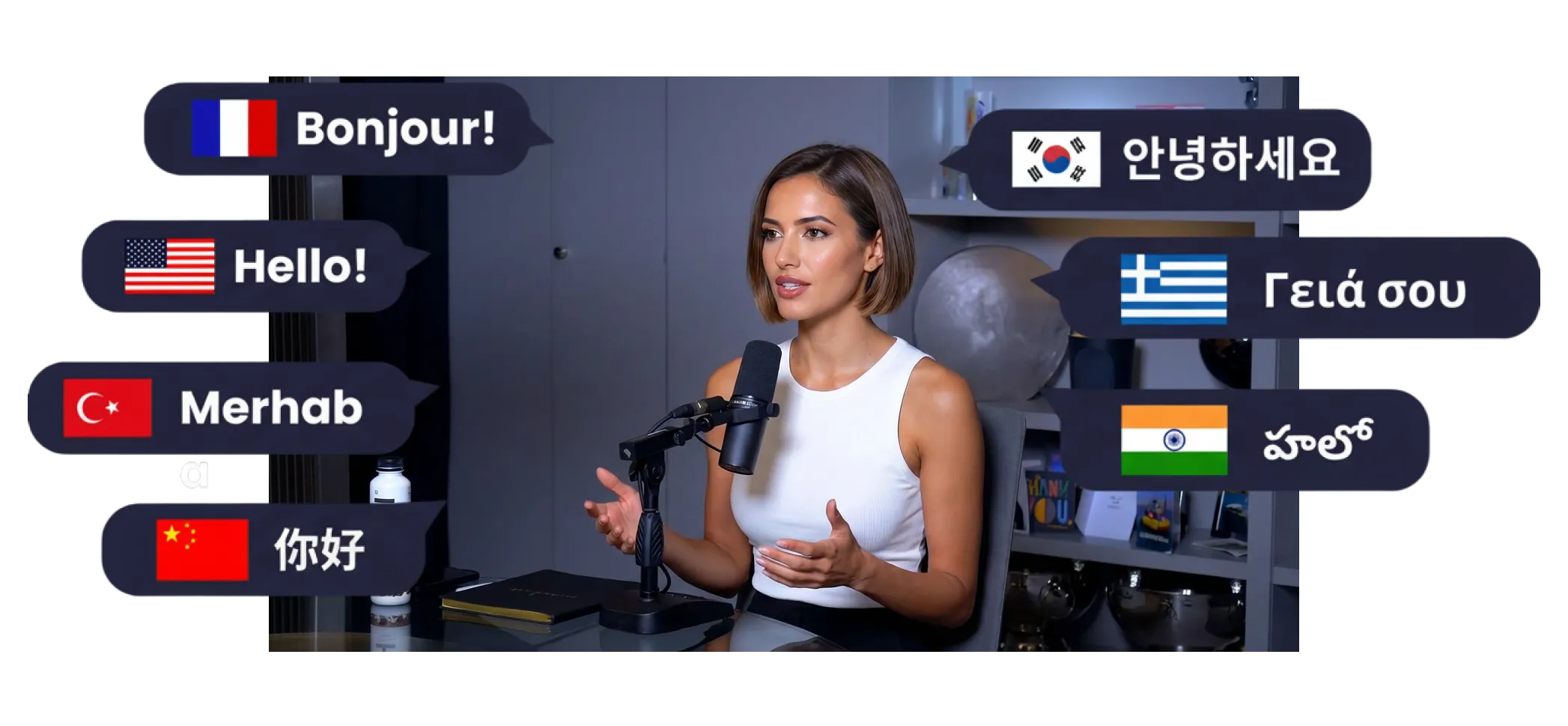
For global enterprises, multi-language support is non-negotiable. Check whether the platform supports real-time multilingual conversations — not just translated scripts.
4. Deployment Flexibility
Where do you need the avatar? Web embed, mobile app, kiosk, or video call? The platform should support deployment across the channels your users actually use.
5. Analytics and Improvement Loop
What data does the platform surface? Conversation logs, completion rates, user drop-off points — these insights are essential for continuously improving avatar performance.
6. Security and Compliance
Enterprise deployments require enterprise-grade security. Confirm data handling practices, regional compliance (GDPR, HIPAA, etc.), and access control capabilities before committing.
Real-World Results: What Enterprise Teams Are Seeing
AI interactive avatars aren't theoretical. Enterprises across banking, education, and healthcare are already seeing measurable outcomes:
- Financial services: AI bank teller avatars handling routine account inquiries reduced average handling time and allowed human agents to focus on complex, high-value cases.
- Corporate L&D: Companies replacing passive video modules with avatar-based training have reported training completion rate increases of 40–60% in pilot programs.
- Customer-facing deployments: Brands using AI avatar brand ambassadors on product pages report longer session durations and higher conversion rates compared to static pages.
The pattern is consistent: when enterprises replace passive, one-way communication with interactive avatar experiences, engagement goes up and operational load goes down.
How to Get Started with AI Interactive Avatars
Getting from concept to deployment doesn't need to be a long IT project. Here's a practical starting framework:
Step 1: Define the use case
Pick one high-impact, bounded use case to start — a specific FAQ workflow, one department's onboarding process, or a single customer journey. Avoid trying to do everything at once.
Step 2: Map the conversation flows
Document the most common questions and interactions within that use case. This becomes the foundation of your avatar's knowledge base.
Step 3: Choose a platform
Evaluate platforms against the criteria above. Look for a solution that matches your technical capabilities — many modern platforms, including AI Studios, are designed for non-technical teams.
Step 4: Build and test internally
Launch a pilot with a small internal group before going live. Collect feedback on response quality, avatar behavior, and edge cases.
Step 5: Deploy, measure, iterate
Track completion rates, user satisfaction, and escalation rates. Use this data to refine conversation flows and expand the avatar's knowledge base over time.
FAQ
What is an AI interactive avatar?
An AI interactive avatar is a digital human powered by artificial intelligence that engages users in real-time, two-way conversations. It combines speech recognition, language understanding, and avatar rendering to simulate a human presence — without requiring a human operator.
How is an AI interactive avatar different from a chatbot?
A chatbot is text-based and typically rule-driven. An AI interactive avatar adds a visual human face, voice, and real-time conversational AI — creating a more engaging, trust-building experience that more closely resembles talking with a real person.
What industries use AI interactive avatars?
Financial services, healthcare, retail, education, and manufacturing are among the leading adopters. Any enterprise that handles high volumes of customer or employee interactions can benefit from AI avatar deployment.
Can I create a custom AI avatar that looks like my brand?
Yes. Platforms like AI Studios allow enterprise teams to create fully custom avatars — including appearance, voice, language, and persona — to match brand guidelines and audience expectations.
How long does it take to deploy an AI interactive avatar?
With modern no-code platforms, a basic deployment can be achieved in days rather than months. Enterprise-scale deployments with full system integrations typically take 4–8 weeks depending on complexity.
Is AI avatar technology expensive?
Costs vary by platform and deployment scale, but the ROI case is typically strong. When compared to the cost of human agents or traditional video production at scale, AI avatars offer significant cost efficiency — particularly for repetitive, high-volume interactions.
What languages do AI interactive avatars support?
Leading platforms support dozens of languages, with real-time multilingual capability. AI Studios, for example, supports 150+ languages — making it a strong fit for global enterprise deployments.
Conclusion
AI interactive avatars represent a meaningful shift in how enterprises communicate — with customers, employees, and partners. As the technology matures and deployment becomes more accessible, the question for enterprise teams is no longer whether to explore AI avatars, but where to start.
The highest-ROI entry points are usually the most repetitive, highest-volume interactions: customer FAQs, employee onboarding, training delivery, and internal helpdesk. These are precisely the use cases where AI avatars replace effort without sacrificing quality — and often improve it.
Ready to see how AI Studios can help your team build and deploy AI interactive avatars?